The board I saw
Omron had category-leading products and a genuine opportunity across Latin America, and no go-to-market machine built for the region's specific gaps. Distribution did not exist at the density the category needed. The launch motion was handled case by case. And the channels that would carry the products to patients and pharmacies had to be built, not optimized.
The opportunity was clear to see and hard to capture, because capturing it meant building the machine first.
The system I invented
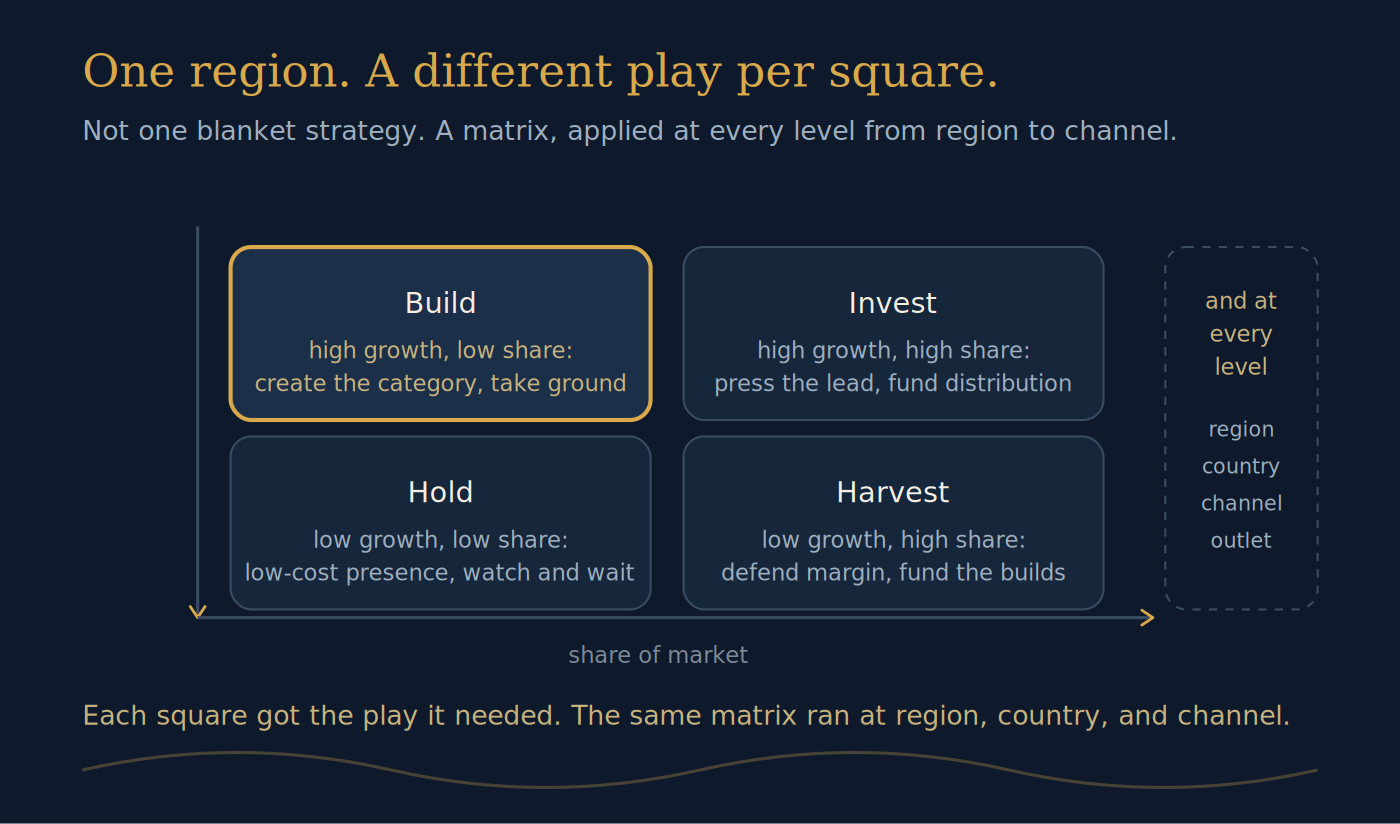
I designed the go-to-market model the region actually needed: a repeatable launch framework, a multi-channel distribution model built for reach, and direct-to-consumer channels running alongside the traditional trade.
The channel architecture spanned national pharmacy chains, independents, supermarket pharmacies, medical and electronics retail, hospital pharmacies, the informal market, and e-commerce. Each channel needed its own motion, and the model was designed so a product could enter through the channel that fit it and expand from there.
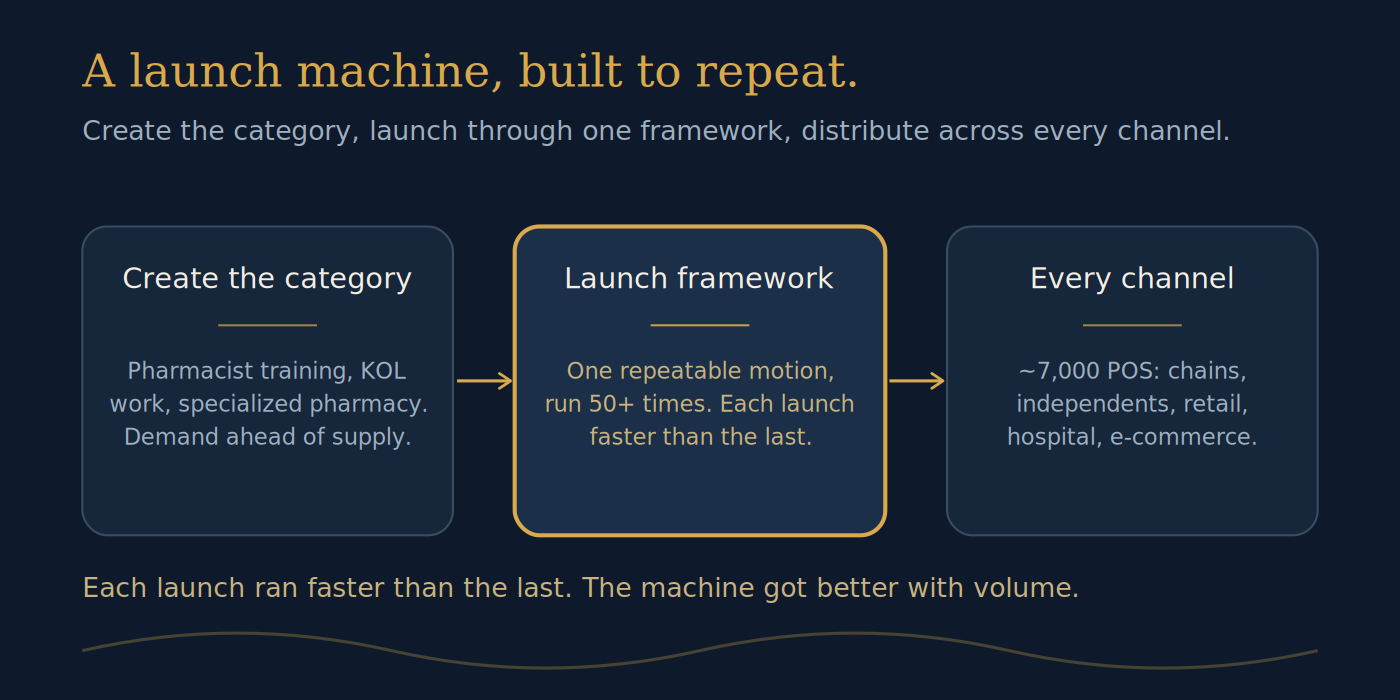
The launch motion was built to create categories, not just place SKUs. That meant pharmacist training programs, key-opinion-leader work with physicians, and specialized-pharmacy concepts that taught the channel to sell blood-pressure and respiratory devices as a category, so demand grew ahead of distribution rather than behind it.
What I built
A point-of-sale network of roughly 7,000 outlets, assembled from scratch across the region. Direct-to-consumer and e-commerce channels stood up alongside the trade. More than fifty product launches taken through the same framework (blood-pressure monitors, nebulizers, and wellness lines), so each launch ran faster than the last. And multi-market exclusive licensing negotiated to lock in the products the channel would carry, backed by the product registrations that let each one sell legally across LATAM.
The distribution model was built to scale and to survive transitions: regionalized beyond the capital cities, and engineered with distributor succession and continuity planning so the network held through changes in partners and buyers.
The result
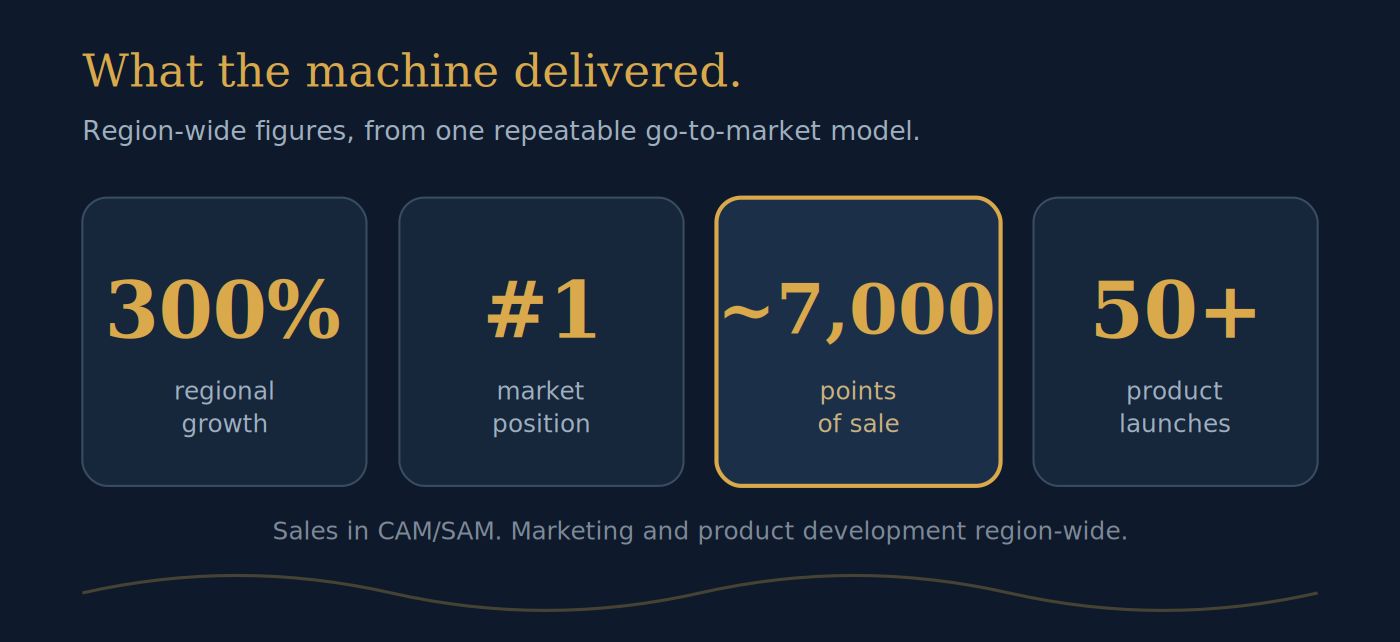
The machine delivered 300% regional growth and the number one market position in the category. Fifty-plus launches ran through one repeatable framework, and the distribution network reached roughly 7,000 points of sale across the region.
The through-line: I do not just market products, I architect the go-to-market machine that carries them. Omron is the commercial half of the thesis, proven across a full region. See the category opportunity, invent the model, build the channel, and let the numbers follow.
What this proves
This is the revenue-and-distribution square of the board, built with the same sequence as the healthcare-operations work: see what others miss, design the system the problem needs, and build it to run at volume. The domain changes; the wiring does not.